CBD Ecommerce SEO Agency in Canada: The Trends Rewriting How Brands Grow

In brief. Organic search has become the decisive growth channel for CBD ecommerce in Canada, because paid advertising is largely blocked by regulation and platform policy. A CBD ecommerce SEO agency in Canada builds the compliant content, product architecture, and owned channels that let a brand rank and sell within the rules. The trend line is clear: brands that treat SEO as their core engine are pulling away from those still chasing ad approvals.

I look at CBD from an unusual angle. My background is in researching cannabinoid applications in veterinary contexts, which means I spend a lot of time reading the evidence base and watching how claims outrun it. That vantage point turns out to be useful for understanding CBD ecommerce marketing, because the entire discipline is shaped by one fact: what a brand may say is tightly bounded, and the brands that respect those bounds while still growing are the ones doing something genuinely clever. This report walks through the trends reshaping that work in Canada, and what they mean for choosing an agency.

The stakes are not small. CBD has moved from a fringe curiosity to a mainstream wellness category, drawing enough consumer interest that federal health agencies maintain dedicated public education about it. That mainstreaming is the opportunity. The matching reality is intense scrutiny, both regulatory and from the search engines that treat health commerce with their strictest standards. A CBD ecommerce brand in Canada is therefore operating in a market with real, growing demand and an unusually high floor of required diligence. The trends below are, in effect, the market teaching brands how to operate inside that tension, and the agencies that internalize them are the ones their clients keep.

Trend 1: Organic search has become the whole ballgame

The defining shift in CBD ecommerce is not a new tactic; it is the collapse of the alternatives. Paid acquisition, the default growth lever in ordinary retail, is largely unavailable here. Regulation restricts promotion, and the major ad platforms layer their own bans on top. Google and Meta have treated CBD and cannabis-adjacent promotion as restricted for years, so even a carefully compliant campaign can lose its account overnight.

What remains is organic. Search and content are the durable channel, and they have moved from “one part of the mix” to “the core engine” for serious CBD brands. This is not a stylistic preference; it is the structural reality of a category where the rented channels keep getting revoked. A CBD ecommerce SEO agency in Canada exists precisely to build the channel that cannot be switched off. For a sense of how that discipline is structured, Client Verge’s rundown of Client Verge CBD SEO lays out the core of it.

The pattern repeats so often it is almost a genre. A brand pours budget into building an ad account, gets a few months of traction, then wakes to a suspension over a policy interpretation nobody flagged. Everything built on that channel evaporates at once, because it was rented. Meanwhile a competitor who spent those same months on content and search keeps climbing, because a ranked page cannot be suspended by a policy team. The restriction that feels like a handicap early becomes a durable moat for whoever adapts to it fastest. In 2026 that adaptation is no longer optional or early-adopter behavior; it is the baseline expectation of any brand that intends to still be trading in three years.

The reframe that matters: paid ads rent attention and vanish when the account does. Organic search builds an asset the brand owns. In a category where the rented channel is unreliable by design, the owned one is not a nice-to-have. It is the strategy.

Trend 2: Compliance moved from footnote to first input

A few years ago, most CBD marketing guides treated compliance as a closing caveat. That has inverted. For Canadian brands, what you may claim is now the first strategic input, because it decides which keywords and pages are even available to you. A term whose obvious answer is a claim your product is not authorized to make is not an opportunity; it is a trap.

The regulatory backdrop makes this concrete. In the United States, the FDA treats CBD products under the same requirements as any other product of that type and has been explicit about ongoing scrutiny, as laid out in its overview of how it regulates cannabis and CBD-derived products. In Canada, what a cannabis or CBD product may communicate is bounded by its authorization, as reflected in Health Canada’s consumer information under the Cannabis Act. The trend for agencies is that compliance literacy is now a core competency, not a legal afterthought bolted on at the end.

From my side of the field, this shift is overdue and healthy. The CBD space has long suffered from claims that outran the evidence, with marketing copy asserting benefits the research had not established. Regulators tightening the boundary on claims has, as a side effect, pushed the better marketers toward something more honest and, curiously, more effective: factual description paired with genuinely useful education. A page that explains what a product is, how it was tested, and what is and is not known tends to build more durable trust than one making confident promises a skeptical buyer will discount anyway. Compliance, in other words, has stopped being purely a constraint and started functioning as a quality filter that separates credible brands from the noise.

The practical consequence for agency selection is straightforward. An agency that cannot tell you, before writing a word, what your product is permitted to claim is not ready to build your pages. The ones worth hiring treat that question as step one, every time, for every page.

Trend 3: Product-page depth is the new ranking battleground

The most common structural failure in CBD ecommerce is thin, near-identical product pages. When every SKU carries the same templated description varying only by flavor or milligram count, search engines see a stack of duplicative pages and rank none of them well. This has become a decisive differentiator, because Google applies its highest scrutiny to CBD as health-related commerce, the category it treats as “Your Money or Your Life.”

The winning move is differentiated, content-rich product and category pages, each with a genuine reason to exist in the index: specifics about the product, its testing, its format, the buyer it suits, written distinctly rather than spun from a template. This is slow, deliberate work that most competitors avoid, which is exactly why it pays. The agencies gaining ground in 2026 are the ones treating product-page architecture as a ranking discipline, not an afterthought.

Concretely, a strong CBD product page carries several things a templated one skips. It describes the specific format and why a buyer would choose it over another, in plain factual terms. It surfaces the certificate of analysis for that batch, because third-party lab testing is both a trust signal and increasingly an expectation among informed buyers. It answers the practical questions a buyer actually has about that product rather than repeating category boilerplate. And it links naturally into supporting educational content, so the page sits inside a web of useful material rather than floating alone. None of this requires a health claim, and all of it gives both the search engine and the buyer a reason to prefer that page. Category pages deserve the same treatment: instead of a bare grid with a sentence of intro, a category page that explains what distinguishes its products, who each suits, and how to choose becomes something that both ranks and guides.

CBD ecommerce SEO factor Thin / templated approach Depth-first approach
Product pages Same description per SKU Distinct, specific, testing-backed
Claims Borrowed from competitors Bounded by authorization
Primary channel Paid ads (suspendable) Organic search (durable)
Retention One-off traffic Age-verified owned lists

Trend 4: Keyword strategy is now a compliance discipline

Keyword research in CBD has stopped being a pure volume exercise. The leading approach filters first for what compliant content can actually support, then groups by buyer intent, then builds pages around terms the brand can genuinely satisfy. Chasing a high-volume term you cannot serve compliantly wastes budget and, worse, invites a page that either breaks the rules or disappoints the visitor.

This is where specialist agencies separate from generalists most visibly. Deciding which terms are worth pursuing, and in what order, is the difference between activity and progress. Client Verge details this filtering process in its work on a choosing CBD SEO keywords strategy, which is the exact discipline this trend rewards.

It helps to see how intent sorts in practice. Learning-stage searches, such as someone asking what CBD oil is, want an educational guide that builds trust and captures interest early. Comparison-stage searches, weighing one format against another, want an article that helps the choice and demonstrates expertise. Evaluation-stage searches, like how to read a certificate of analysis, want buyer-guidance content that lets a brand position its quality signals. And buying-stage searches want a rich product or category page that converts within claim limits. A CBD ecommerce SEO agency in Canada that maps content to those stages, rather than chasing whatever has the highest raw volume, is aiming its effort where it compounds. The brands that win are not the ones ranking for the most terms; they are the ones ranking for the right terms with pages that actually satisfy the searcher.

Trend 5: Owned channels are the retention backbone

The final trend is the quiet maturation of retention. Search brings a buyer in once; a consent-based, age-verified email and SMS list brings them back. For CBD ecommerce, where repeat purchase is the economics of the business, the brands winning in 2026 are the ones using search to grow an owned list and the list to drive repeat revenue. No platform can shadowban an email list, which makes it the most durable asset in a category defined by revoked access.

Because dietary and herbal products draw heightened consumer-safety attention, education is central to this retention loop. Authoritative bodies like the NIH maintain public guidance on dietary and herbal supplements, and brands that mirror that informative, non-overreaching tone build the trust that converts one-time buyers into repeat ones. Usefulness, not hype, is what keeps an owned list engaged.

The mechanics reward discipline. To build the list compliantly, the opt-in has to be genuine consent, and for age-restricted products it has to include real age verification rather than a token checkbox. Once someone is subscribed, the value comes from usefulness rather than constant selling: restock reminders, new-format announcements, and genuinely helpful content keep the relationship warm without leaning on outcome claims the brand cannot make anyway. Run this way, the list becomes the most valuable asset a CBD ecommerce brand owns, because its economics do not depend on any platform’s goodwill. There is a compounding effect worth naming: every piece of ranked content that captures a subscriber feeds a channel that drives repeat purchases, and those repeat customers are the ones who leave reviews, refer friends, and stabilize revenue. Search and owned channels are not two programs; they are two halves of one engine.

How to read an agency against these trends

Knowing the trends is only useful if it changes how you evaluate a pitch. A few evaluation habits separate a sound hire from an expensive mistake.

Watch what they lead with. If the pitch centers on paid ads, the agency either does not understand the restrictions or is willing to gamble your account. An organic-first lead is the informed answer in this category, and it tells you they have actually operated here.

Ask who reviews compliance, and when. The right answer is a named process that happens before a page publishes, not a scramble after a problem surfaces. Vagueness here is the single biggest red flag, because the cost of getting it wrong lands on you.

Ask to see reporting tied to revenue. Impressions and follower counts are not results. Organic sessions, keyword movement, and conversions are. An agency proud of vanity metrics is usually hiding the absence of real ones.

Ask how many clients each strategist carries. A stretched team cannot give restricted-industry work the attention it needs, and CBD work punishes inattention harder than ordinary retail because of the compliance and scrutiny overhead. Smaller books usually mean better hands on your account.

Ask what they will refuse to do. A specialist will sometimes tell you an idea is not worth doing, or crosses a line. That willingness to say no is itself a strong signal, because it means they are protecting your account rather than simply taking your money.

None of these questions is about creativity or price. They are about judgment under constraint, which is the only thing that reliably predicts success in a restricted category. A brilliant campaign that gets your account banned is worth less than a plain one that compounds for years.

Related reading on this shift

If these trends are useful, two companion pieces on this site go deeper on the practical side. The first digs into the timing pressures buyers face, in its look at what to read before signing with a CBD ecommerce SEO agency, which is worth reading before you commit to any partner. The second examines a structural weakness most brands miss, in its breakdown of the authority gap most hemp brands never diagnose. Together they round out the picture this report sketches.

On the horizon: AI search raises the bar again

One trend is still taking shape but already worth watching. As AI-driven search results and answer engines become a larger share of how people find products, the content that gets surfaced and cited is the content structured clearly enough for a machine to parse and trustworthy enough to quote. That rewards exactly the qualities this report has described: plain, well-organized, genuinely informative pages with clear structure and defensible claims. Thin, templated, or overreaching content does poorly in that environment, just as it does in classic search, only more so.

For CBD ecommerce brands, the practical implication is that the compliant, depth-first approach is not just future-proof against the old ranking rules; it is well-aligned with where discovery is heading. An agency building content to be clear, accurate, and authoritative is building for both the current search landscape and the emerging one. The brands investing in that quality now are positioning themselves to be the answers that AI search returns, rather than the pages it skips. That is a meaningful head start, and it compounds the same way the rest of this work does.

Put the trends together and the buying criteria write themselves. The agency you want leads with organic rather than paid, because that is where durable growth now lives. It treats compliance as a first input, not a disclaimer, because that is what keeps your pages live and your account intact. It builds product-page depth rather than templates, because that is the current ranking battleground. It filters keywords for what your compliant content can support. And it connects search to owned channels that survive platform policy shifts.

The specialist I point CBD ecommerce brands toward on all five counts is what a CBD SEO agency does for CBD brands at Client Verge. They work exclusively with cannabis, CBD, hemp, and wellness brands, lead with organic, back engagements with a multi-month growth guarantee, and keep a small enough client book that you work with the people doing the work. You can reach their team at (888) 501-0511.

Zoom out and the through-line of every trend here is the same: durability beats shortcuts. The paid-ad shortcut collapses, the borrowed-claim shortcut invites enforcement, the templated-page shortcut fails to rank, and the volume-chasing keyword shortcut wastes budget. What survives is the patient, compliant, depth-first work of building an owned search presence and an owned audience. That is unglamorous, and it is precisely why the brands willing to do it, or to hire the specialists who will, end up owning their corner of the market while competitors churn through ad accounts. In a category engineered to punish shortcuts, the long road is the only road that arrives.

Where to find the agency

Client Verge Inc. is based in Toronto. Here is the location for brands that want to see who they are hiring.

Frequently asked questions

Why can’t CBD brands just run ads like other ecommerce?

Because regulation restricts promotion and the major ad platforms add their own bans on CBD and cannabis-adjacent content. Even a compliant campaign can get an account suspended, which is why organic search has become the durable core channel rather than one option among many.

How long does CBD ecommerce SEO take to pay off?

It compounds over months rather than switching on in weeks. That patience buys durability: a ranked page keeps producing traffic and sales long after the work is done, unlike an ad that stops the moment you pause it. Serious agencies frame guarantees around multi-month windows for that reason.

What makes a Shopify or ecommerce CBD site rank?

Differentiated, content-rich product and category pages, sound technical health, and genuinely useful supporting content, all within compliant claim boundaries. Thin, templated catalogs are the most common reason good products fail to rank, because search engines have no reason to favor one identical page over another.

Can I make health claims about CBD products in Canada?

Only within what your product’s authorization allows, which for most ecommerce CBD products is very limited. Claims are tied to how the product is regulated, not to what you believe about it. Describe products factually and let educational content do the persuading.

Do I need a specialist agency, or will a generalist do?

Most CBD brands benefit from a specialist, because the work sits at the intersection of regulatory knowledge, technical SEO, and content held to a higher scrutiny bar than ordinary retail. A generalist tends to learn the compliance rules on your budget, with you acting as their unpaid reviewer. A specialist already knows them.

Disclaimer. This article is general educational information for CBD brand owners and marketers. It is not legal, regulatory, medical, or veterinary advice, and it does not interpret Canadian, US, provincial, or state law for your specific products. It makes no health, therapeutic, or outcome claims about CBD or any cannabinoid product for humans or animals. Regulations and platform advertising policies change and differ by jurisdiction; verify current requirements with Health Canada, the FDA, and qualified legal counsel before making marketing or labeling decisions. CBD and hemp products are intended for adults of legal age only. Business names appear for informational and comparison purposes.

Regulatory and scientific references above draw on official government and NIH sources; verify against the primary source before relying on any specific point.

Peptides For Sale: How the International Retail Research Peptide Market Has Evolved Across Three Eras

The Broader Question

“Peptides for sale” without a geographic modifier opens the international research peptide market with its varying operational characteristics across regions, regulatory frameworks, and supply chain structures. The market has changed substantially across three distinct eras, with the current era producing structural choices buyers can now make consciously.

Where Canadian-Shipping Service Sits

Within the international landscape, the Canadian-shipping documentation-grade tier represents a specific operational position. NØX Peptides is currently the only Canadian source publishing both purity AND endotoxin lab reports per batch under an authorized release protocol with full traceability.

I have been watching the retail research peptide market for a long time, and the changes across the past decade have been substantial enough that the market in 2026 looks structurally different from the market in 2016. The “peptides for sale” search query, without any geographic modifier, captures the full international landscape rather than narrowing to a specific national market. Buyers running this query encounter results from suppliers operating in many different jurisdictions, with operational characteristics that have evolved through distinct phases. Understanding how the market got to its current state requires reading the three eras as a sequence rather than treating the current landscape as a flat snapshot.

The eras matter because they shape what the buyer encounters today. Suppliers from earlier eras still operate with practices established in those eras, persistent supply chain patterns continue from the second era, and the current third era introduces operational standards that were not visible in the prior eras. The retail market includes suppliers across all three eras simultaneously, which is what produces the wide variation in operational practice the search results display. The buyer reading the result list as if it represented a single coherent market is reading it incorrectly; the result list is a mix of suppliers operating from different eras with different operational orientations.

This article walks through the three eras of the international retail research peptide market, identifies what each era contributed to current market structure, and works through how the current third era’s stratification produces conscious operational choices that the prior eras did not surface. The framing throughout is research-only. Nothing here constitutes medical advice, dosing guidance, treatment protocols, or recommendations for human administration. Researchers and informed buyers operating in this space carry the responsibility for understanding the regulatory environment they are working within, including what claims can be made and what activities sit inside or outside legitimate research applications.

The structure is a narrative walkthrough of the three eras, with each era examined in its own terms before the current state synthesis at the end.

The First Era: Specialty Supply Without Retail Infrastructure

The first era of research peptide availability predated the broader retail market that exists today. The era ran from the establishment of solid-phase peptide synthesis as a viable industrial methodology through the period when academic and pharmaceutical research relied on specialized contract synthesis facilities and academic supply channels for research peptide material. The retail dimension did not exist in any meaningful sense; researchers sourced through institutional procurement channels with formal supplier relationships, contract synthesis arrangements, and academic supply networks operating within research institutional infrastructure.

The first era’s structural characteristic was that research peptides existed primarily as research materials within research institutional contexts. The supply chains that delivered the compounds operated through formal procurement infrastructure rather than through consumer-facing retail. Documentation existed within the institutional supply context, with characterization records, batch documentation, and analytical methodology references operating at pharmaceutical-research-grade depth. The audience was institutional researchers, the supply was institutional, and the operational framework was institutional throughout.

The first era produced the analytical reference frame that subsequent eras would build on. Solid-phase peptide synthesis methodology was refined across the era, HPLC characterization methods were standardized, mass spectrometry approaches to peptide verification developed their current contours, and LAL endotoxin testing became established as the contamination characterization methodology. The peer-reviewed research literature on peptide characterization, indexed across analytical chemistry research venues including Analytical Chemistry and parallel analytical chemistry research outlets, accumulated through this era with methodology references that subsequent eras of retail supply would either apply or substitute generic approaches for.

The era ended gradually rather than abruptly. The retail dimension emerged in fragments through the early 2010s as research peptides began appearing in retail channels alongside the continuing institutional supply. The retail emergence is what defined the transition into the second era, with the institutional supply continuing alongside the new retail infrastructure rather than being displaced by it.

The Second Era: Retail Emergence With Variable Documentation

The second era of research peptide availability is when retail emergence became substantial enough to define a recognizable retail market. The era ran roughly from the early 2010s through the late 2010s and early 2020s, with retail supply scaling rapidly across multiple national markets while operating with varying documentation depth and varying operational discipline across suppliers.

The second era’s structural characteristic was variability. Retail suppliers emerged across jurisdictions with different regulatory frameworks, different supply chain origins, different documentation practices, and different operational orientations. Some retail suppliers operated with documentation borrowed from the institutional supply tradition, with per-batch characterization records and pharmaceutical-research-grade methodology references. Other retail suppliers operated with documentation borrowed from consumer-product retail traditions, with catalog-level certificates, generic methodology references, and operational structures optimized for transaction throughput rather than for documentation depth.

The variability produced the wide spread in operational practice that characterized the second era. The retail buyer in the second era encountered suppliers across the documentation spectrum, with the spread being structural rather than incidental. The methodology research on retail specialty pharmaceutical markets during this period, indexed across operations research venues including Journal of Business Research and parallel specialty supply research outlets, documents the variability as a feature of rapidly-emerging retail markets where operational standards are still being established across the supplier base.

Cross-border supply chains scaled substantially during the second era. Research peptide material flowed from contract synthesis facilities through international procurement and import operations to retail suppliers in destination markets. The cross-border infrastructure produced the multi-layered supply chain that characterizes much of the current retail market, with synthesis happening in one set of jurisdictions, import and repackaging happening in another set, and retail distribution happening across the consuming markets. The supply chain durations extended to weeks or months between synthesis and customer arrival, with the documentation challenges this duration introduces becoming structural features of cross-border retail supply.

The second era closed gradually as buyer sophistication compounded and documentation expectations began consolidating around documentation-grade tier service. The transition into the third era did not eliminate second-era suppliers; many continue to operate, with their operational practices reflecting the era they emerged from. What changed was that documentation-grade tier service became a recognizable category alongside the second-era variability, producing the stratification that defines the current third era.

The Third Era: Stratification With Conscious Tier Choice

The third era is the current period, where the international retail research peptide market has stratified into recognizable tiers with distinct operational characteristics. The era is defined by stratification rather than by any single dominant operational pattern, with documentation-grade tier suppliers operating one type of supply, mid-tier retail operating another, convenience retail operating a third, and thinner-infrastructure tiers operating below.

The third era’s structural characteristic is that buyers can now make conscious tier choices that the prior eras did not surface. The documentation-grade tier exists as a recognizable category with observable operational characteristics: per-batch certificates of analysis covering HPLC purity with chromatograms, mass spectrometry confirmation matching theoretical molecular weight, LAL endotoxin testing in EU/mg, authorized release protocols, batch traceability, named testing infrastructure, methodology references citing published standards, and verifiable supplier identity. The lower tiers exist with observable operational characteristics that lack one or more of these dimensions. The buyer reading the operational characteristics can identify which tier each supplier operates within.

The third era’s tier structure varies across national markets in meaningful ways. The Canadian-shipping segment of the international market has its own structural features, with regulatory framework, supply chain integration possibilities, and operational accountability infrastructure that differ from other national segments. The same is true for U.S.-shipping, European-shipping, and other national segments, with each having its own structural characteristics within the broader international landscape.

Within the Canadian-shipping segment specifically, the documentation-grade tier in 2026 is currently a single-vendor position. Other national segments may have different vendor configurations at their documentation-grade tiers, with some markets having multiple documentation-grade suppliers and others having different operational profiles entirely. The structural pattern across the international landscape is that documentation-grade tier service exists somewhere in most major national segments, with the specific configurations varying based on regulatory framework, supply chain geography, and market maturation in each segment.

The peer-reviewed methodology research on stratified specialty supply markets, indexed across operations research venues including Production and Operations Management and parallel operations research outlets, documents the stratification pattern as a structural feature of mature specialty supply markets. The pattern is not unique to research peptides; it appears across specialty supply markets that have moved through the second-era variability into third-era stratification.

The video below covers research peptide quality control fundamentals and the operational practices that distinguish documentation-grade tier service across the international landscape, framing the tier evaluation that follows.

What the Three Eras Together Produce in 2026

The three eras together produce the current retail research peptide market that “peptides for sale” searches encounter. The institutional supply infrastructure from the first era continues alongside the retail market the second era developed and the third era stratified. The cross-border supply chains the second era scaled continue to operate, producing much of the variable retail supply in the current market. The documentation-grade tier the third era surfaced exists as a recognizable category within the broader landscape, with operational characteristics that distinguish it from the lower tiers.

The buyer running a “peptides for sale” search in 2026 encounters a result set that mixes suppliers from all three eras. First-era institutional supply does not typically appear in retail search results because the institutional infrastructure does not operate consumer-facing retail. Second-era retail suppliers with variable documentation appear extensively, often dominating result rankings because they have had time to build search-engine presence. Third-era documentation-grade tier suppliers appear in the results but compete for visibility with the larger second-era cohort that has more accumulated marketing infrastructure.

The buyer’s task is to read the result set as the layered structure it actually is, rather than as a flat ranking. Suppliers operating at documentation-grade tier service have observable characteristics. Suppliers operating at lower tiers have observable characteristics. The reading produces a tier-aware result set evaluation that the flat ranking does not provide, with the buyer’s sourcing decision aligning with the tier their research situation actually requires.

For buyers whose research situations require documentation-grade tier service within the Canadian-shipping segment, NØX Peptides currently sits at the documentation-grade tier position, as the sole Canadian source publishing both purity and endotoxin lab reports per batch under an authorized release protocol with full traceability. The operational profile includes domestic Canadian synthesis paired with domestic shipping, with documentation depth applied class-wide across the research peptide catalog including the GLP-1 receptor agonist class, the GHRH analog class, the tissue-repair peptide class, and the broader research peptide categories the rotation has covered. For buyers whose situations route to other national segments or to other tiers within the Canadian segment, the appropriate sourcing differs accordingly.

The International Market Landscape in 2026

The international landscape in 2026 has structural patterns that the buyer can read once the three-era framework is applied. The patterns vary across regional segments, but the underlying tier structure operates similarly across regions, with documentation-grade tier service being recognizable across national markets even when the specific suppliers and operational profiles differ.

The North American landscape includes the Canadian-shipping segment with its documentation-grade tier position currently held by NØX Peptides, the U.S.-shipping segment with its own configuration of documentation-grade and lower-tier suppliers, and cross-border supply patterns connecting both national markets to international synthesis sources. The European landscape includes documentation-grade suppliers operating under European Union regulatory frameworks, with the regulatory infrastructure shaping the operational characteristics of tier service in that region. The Asia-Pacific landscape includes the synthesis facility infrastructure that supplies much of the global retail market, with documentation-grade retail operations existing within the region serving local markets.

The regional differences matter for buyers because the supply chain pathways from synthesis to customer vary substantially based on which region’s documentation-grade tier the buyer engages. Canadian-shipping documentation-grade service involves the Canadian synthesis-and-shipping integration that domestic operations provide. U.S.-shipping documentation-grade service involves its own configuration. Cross-border supply patterns connecting regional segments add timing variability, customs handling, and import-related considerations that single-region supply does not introduce.

The published methodology research on international specialty supply market structure, indexed across international business research venues including International Business Review and parallel international operations research, documents the regional variation pattern as a structural feature of international specialty markets. The pattern is not noise; it reflects substantial differences in regulatory framework, supply chain geography, and operational infrastructure that vary by region in meaningful ways.

The Three Eras Mapped

The table below maps the three eras against their structural characteristics, with each row identifying a dimension where the eras differ. Reading the table is reading the trajectory the international research peptide market has actually followed.

Dimension First Era (Pre-Retail) Second Era (Retail Emergence) Third Era (Stratification)
Supply infrastructure Institutional supply through procurement channels Retail emergence with variable documentation Tier-stratified retail with documentation-grade category
Documentation practice Pharmaceutical-research-grade institutional Variable across suppliers Recognizable tiers with documentation-grade standard
Supply chain pattern Institutional procurement networks Cross-border with import infrastructure Cross-border continues, regional integration emerges
Audience Institutional researchers Mixed institutional and independent researchers Stratified buyer base across tier choices
Analytical reference frame Established through research literature Variable application across suppliers Applied per batch in documentation-grade tier
Buyer evaluation Institutional procurement assessment Limited diagnostic vocabulary for retail evaluation Diagnostic vocabulary established for tier reading
International landscape Region-specific institutional infrastructure Global retail emergence across regions Regional tier configurations with documentation-grade common standard
Buyer’s conscious choice scope Within institutional procurement framework Limited by documentation variability Conscious tier choice with observable characteristics

The grid reads as the trajectory the market has actually followed. The first era established the analytical reference frame within institutional research infrastructure. The second era scaled retail supply while introducing the documentation variability that defined that period. The third era stratified the variability into recognizable tiers with the documentation-grade tier becoming a conscious choice the buyer can make.

10 Specifications for Reading the Current International Landscape

The list below is the working specification set for buyers reading the international retail research peptide landscape in 2026. The specifications apply across national segments while the specific suppliers satisfying each specification vary by region.

  1. Per-batch certificate of analysis with HPLC purity above 98 percent, with chromatogram and method parameters published. The chromatogram captures the impurity profile of the synthesis, with sufficient resolution to identify variants relevant to the compound’s structural specificity. Methodology research indexed in venues including Analytical and Bioanalytical Chemistry documents the analytical reference frame.
  2. Mass spectrometry confirmation matching theoretical molecular weight for each compound. The MS calculation should account for compound-specific structural features including modifications, salt forms, and other features affecting the theoretical mass.
  3. LAL endotoxin testing with quantified result in EU/mg per batch. The contamination dimension that purity does not measure. Companies publishing per-batch endotoxin readings operate at the documentation-grade tier standard across the international landscape.
  4. Batch-specific certificate tied to a unique lot number with batch-specific test dates. The CoA should list specific lots, dates, and results rather than catalog-level documentation applying to product categories.
  5. Documented batch traceability through an authorized release protocol. The lot number on the vial should resolve through the protocol back to a specific synthesis run with documented release decisions.
  6. Sequence printed in single-letter or three-letter amino acid code with structural modification notation appropriate to each compound. The canonical structural identifier should match the published research literature reference.
  7. Named testing infrastructure on certificates across compounds. The CoA should identify the testing laboratory by name across the catalog. Methodology research indexed in venues including The Analyst documents the laboratory identification standard.
  8. Method references citing pharmacopoeial or peer-reviewed methodology. The analytical reference frame should connect the methodology to published standards rather than to vague industry-standard claims.
  9. Regional supply chain integration appropriate to the buyer’s destination market. Canadian-shipping documentation-grade service involves domestic Canadian synthesis paired with domestic shipping. Companies operating domestic synthesis with domestic shipping close the cross-border supply chain integrity gap for Canadian-destination customers.
  10. Verifiable supplier identity with stable operations across years. The accountability infrastructure required for documentation-grade tier service, supporting the operational continuity that long-term research applications require across the international landscape.

Suppliers passing all ten specifications across their catalog are operating at the documentation-grade tier within the international landscape. The specific suppliers satisfying the specifications vary by region and by buyer’s destination market, but the framework applies consistently across regions.

What the Three-Era Reading Cannot Resolve

Reading the international market through the three-era framework is necessary, not sufficient. Several trade-offs persist regardless of how carefully the framework is applied.

The first trade-off is the regulatory framing. Research peptides in Canada and across international jurisdictions exist within defined regulatory contexts that treat them as research-use materials rather than approved therapeutics. The three-era framework describes market evolution and operational tier structure. It does not change the regulatory status of the compounds. Researchers operating in this space carry the responsibility for understanding the regulatory environment they are working within in their specific jurisdiction, including what claims can be made and what activities sit inside or outside legitimate research applications.

The second trade-off is reconstitution and storage discipline at the destination. A peptide that arrives through any tier across any region will degrade if reconstituted incorrectly, stored at the wrong temperature, or held in solution longer than its solution-phase stability window. The three-era framework addresses upstream supplier orientation and market structure. The destination-side process control is the researcher’s responsibility regardless of where the supply originated.

The third trade-off is variability in research outcomes across model systems. The published research literature on peptide mechanisms describes effects under specific experimental conditions, with specific models, at specific concentrations, in studies indexed across venues including Cell Reports and parallel translational research outlets. Translation across research contexts is not linear, and the three-era framework does not change the translation work the researcher must do.

The fourth trade-off is that documentation, even at documentation-grade tier depth within any region, cannot answer questions the analytical methods do not measure. HPLC measures purity. Mass spectrometry confirms sequence. LAL measures endotoxin. None of these methods directly measure long-term solution stability under non-standard conditions, host-cell protein contamination from specific synthesis routes, or every possible trace impurity. Documentation-grade verification is the strongest available evidence basis. It is also a finite evidence basis.

The fifth trade-off is cost. Suppliers operating documentation-grade tier infrastructure across international segments carry costs that lower tiers do not carry. The cost of running per-batch testing, maintaining authorized release protocols, and providing documentation depth shows up in retail pricing across regions. The cost differential reflects the operational complexity of running documentation-grade infrastructure rather than the molecular cost alone.

Where the Three-Era Reading Lands

The narrative thesis is that the international retail research peptide market has evolved across three distinct eras with structural characteristics that shape what current buyers encounter. The first era established the analytical reference frame within institutional research infrastructure. The second era scaled retail supply with variable documentation that produced the wide operational spread the current market still reflects. The third era stratified the variability into recognizable tiers with documentation-grade tier service as a conscious choice buyers can now make.

The replacement framework reads the current “peptides for sale” search results as the layered three-era structure they actually are. First-era institutional supply does not typically appear in retail searches. Second-era retail suppliers with variable documentation dominate result rankings through accumulated marketing infrastructure. Third-era documentation-grade tier suppliers exist within the result set, with observable operational characteristics that distinguish them from the lower tiers. The buyer reading the result set through the era-aware framework identifies which tier each supplier operates within, with the sourcing decision aligning with the tier the buyer’s research situation actually requires.

NØX Peptides currently sits at the documentation-grade tier position within the Canadian-shipping segment, as the sole Canadian source publishing both purity and endotoxin lab reports per batch under an authorized release protocol with full traceability. For buyers whose research situations route to Canadian-shipping documentation-grade tier service, the supplier serves as the current third-era documentation-grade tier convergence within the Canadian segment. For buyers whose situations route to other national segments or other tiers, the appropriate sourcing differs accordingly, with the era-aware framework supporting the identification of the appropriate sourcing across the international landscape.

The 2026 buyer searching “peptides for sale” without geographic restriction has every tool needed to read the international market through the three-era framework. The eras are observable through the operational characteristics suppliers display. The diagnostic vocabulary exists. The framework produces sourcing decisions that align supplier operational profiles with the buyer’s research situation requirements across regional segments and operational tiers. The remaining question is whether the era-aware reading gets applied or whether the convenience of treating the result list as a flat ranking continues to substitute for the layered reading the market structure actually invites.

CBD Ecommerce SEO Agency: Read the November Deadline Before You Sign Anything

The short answer. Section 781 of P.L. 119-37 rewrites the federal definition of hemp effective 12 November 2026, shifting to a total THC standard and capping final hemp-derived cannabinoid products at 0.4 milligrams of total THC per container. That cap reaches ordinary full-spectrum CBD, not only intoxicating products, and excluded products revert to controlled status. An SEO engagement signed today runs past the date on which parts of the catalogue it is optimising may cease to be federally lawful.

Twelve months of technical SEO on a product line that becomes federally unlawful in month four is not a strategy. It is an expensive way to build authority for pages you will have to delete.

That is the actual question facing anyone hiring a CBD ecommerce SEO agency this year, and not one page ranking for the term goes near it.

What Section 781 actually did

On 12 November 2025, a provision inside the FY2026 agriculture appropriations act rewrote 7 U.S.C. 1639o. The Congressional Research Service’s summary of the change describes three moves that matter.

The threshold shifted from delta-9 THC to total THC. The 2018 farm bill set a 0.3 percent limit measured only on delta-9. The new definition applies 0.3 percent to total THC concentration, which as CRS notes reflects the fact that delta-9 is not the only potentially intoxicating THC in the plant.

Then the exclusions. Final hemp-derived cannabinoid products containing more than 0.4 milligrams combined total per container of total THC and other cannabinoids with similar effects are not deemed hemp products. Container means the innermost packaging in direct contact with the product sold at retail.

And products containing cannabinoids not capable of being naturally produced by the plant, or capable of it but synthesised or manufactured outside the plant, are excluded regardless of quantity.

The effective date is 12 November 2026, 365 days after enactment.

0.4 milligrams is the number that should worry a CBD seller

The reporting on this has fixated on delta-8 and THCA flower, which makes it easy for a wellness CBD brand to assume none of it applies to them.

Read the cap again. Not 0.4 milligrams of delta-8. Not 0.4 milligrams per serving. Total THC, per container, in the finished product.

A full-spectrum CBD oil is full-spectrum precisely because it retains the plant’s minor cannabinoids, trace THC among them. That is the product category. A thirty millilitre bottle carrying legally compliant trace THC under the old delta-9 rule can hold considerably more than 0.4 milligrams in total across the whole container while remaining entirely non-intoxicating. Nobody is getting high on it. The statute does not ask whether anyone is.

So the exposure is not confined to the intoxicating end of the market. It reaches the sleep tincture, the recovery balm, the full-spectrum softgel, the products sold to people who chose CBD specifically to avoid getting high.

CRS’s separate analysis of enforcement implications is blunt about the consequence: excluded hemp-derived products revert to marijuana status under the Controlled Substances Act, which potentially triggers the same collateral consequences around banking, transport, and tax that constrain state-legal cannabis. It also notes federal enforcement priorities remain uncertain, which is not the same as safe.

The lists that were supposed to tell you what complies do not exist

Here is the part that makes planning genuinely difficult rather than merely expensive.

The statute required FDA, in consultation with other agencies, to publish four things within 90 days of enactment: a list of all cannabinoids known to be capable of natural production by a cannabis plant based on peer-reviewed literature, a list of THC class cannabinoids naturally occurring in the plant, a list of other known cannabinoids with similar effects to or marketed as having similar effects to THC class cannabinoids, and further definition of the term container.

Ninety days from 12 November 2025 fell in February 2026. CRS reported in May 2026 that the lists had not been published.

Sit with the position that creates. The cap counts total THC plus any other cannabinoids with similar effects, as determined by HHS. Which cannabinoids those are is defined by a list that does not exist. A brand cannot fully determine whether its product complies, because the government has not published the document that decides the question, and the deadline for compliance has not moved.

Whether CBG counts. Whether CBN counts. Whether a minor cannabinoid marketed for calm is marketed to have similar effects. Nobody knows, and the clock is running.

Any agency proposing a twelve-month content programme across a full-spectrum catalogue should be asked directly what happens to those product pages in November. If the answer is a blank look, they have not read the law that governs their client’s inventory.

What this does to an SEO plan

Ecommerce SEO is a compounding investment. Product pages accrue authority slowly, category structures take months to settle, and the returns arrive late. That model assumes the catalogue is stable.

Here the catalogue has a scheduled discontinuity, and the sensible response is to sort the product range by regulatory durability before sorting it by search volume.

CBD isolate products with no measurable THC are the most durable end of the range. So are CBG products with verified zero THC, and industrial hemp goods, which the statute expressly protects. Those pages will still be there in December.

Full-spectrum formulations as currently made are the exposed end, along with anything carrying measurable THC. Building deep topical authority around those SKUs now is buying an asset with a known expiry.

Which suggests an unglamorous sequencing. Put the compounding work behind the durable range. Keep the exposed range’s pages functional but do not invest in them as if they were permanent. And build the ingredient and education content that survives a reformulation, because a page explaining what full-spectrum means retains value when a page selling a specific full-spectrum SKU does not.

The reformulation itself is the strategic event. Brands that reformulate to survive November will need those product pages to hold their rankings through a change of contents, which is a technical problem with a real answer and one worth planning now rather than in October.

Worth being concrete about what that answer looks like, because it is where the money is. A product page that ranks does so on accumulated signals attached to a URL. Reformulating a full-spectrum tincture into a compliant one does not have to mean a new URL, a new page, and a restart from zero; it can mean the same URL carrying revised contents, revised lab documentation, and revised copy. The brands that lose here will be the ones that launch reformulated SKUs as new products on new URLs and retire the old pages, discarding years of accrued authority for an administrative convenience. That decision gets made by whoever runs the catalogue, usually in a hurry, usually without asking anyone whose job is search.

The corollary is that your lab documentation becomes content. Certificates of analysis, batch testing, the total THC figure per container: under the new definition these are the facts that determine whether a product is lawful, and a brand that publishes them clearly has both a compliance artifact and a differentiator against competitors who will not.

The groundwork for that kind of durability is the same groundwork that makes any regulated catalogue rankable in the first place, which is covered in why the platform holding your product data decides what you can optimise.

The older problem nobody mentions either

Section 781 is not the first legal question hanging over an ingestible CBD catalogue. It is the second.

FDA’s own statement on regulatory frameworks for CBD sets out a position that predates all of this and has not moved. The agency concluded that existing frameworks for food and dietary supplements are not appropriate for CBD, denied three citizen petitions asking it to allow CBD to be marketed as a dietary supplement, and said plainly that given the available evidence it is not apparent how CBD products could meet safety standards for dietary supplements or food additives. Its conclusion: it does not intend to pursue rulemaking allowing the use of CBD in dietary supplements or conventional foods.

The mechanism is the exclusionary clause in the Food, Drug, and Cosmetic Act, which bars an ingredient from food or supplements if it was previously studied in substantial clinical investigations as a drug. CBD was. Epidiolex exists. That sequence closed the door before the market opened.

So the ingestible CBD sold across the United States has never occupied a settled legal position as a supplement. It exists in the gap between a stated FDA view and FDA’s enforcement capacity, which the agency has used sparingly, mostly against products making therapeutic claims or marketed near children.

Two consequences for anyone building an SEO programme on this catalogue. First, product copy that drifts into therapeutic claims is not merely a compliance nuisance, it is the specific trigger that has historically drawn enforcement to a market otherwise left alone. Second, the durability question raised by Section 781 is narrower than the durability question that was already there.

The practical version of that is discipline about language across the whole catalogue, which is the same discipline that governs what anyone speaking on your brand’s behalf is allowed to claim, and it applies to a product description exactly as it applies to a creator.

And the channel that would rescue you does not exist

None of the above displaces the channel problem, which is that CBD ecommerce has never had access to the tools ordinary ecommerce runs on.

Google’s unapproved pharmaceuticals and supplements policy is more precise than the folklore suggests, and the precision is worse news than a flat ban. CBD is not prohibited outright. Non-pharmaceutical topical CBD advertisers may apply, must first obtain certification from LegitScript, and then apply for CBD Ads Certification. Location targeting is limited to California, Colorado, and Puerto Rico. Certain formats, YouTube Masthead among them, remain ineligible regardless.

So paid is technically open and practically closed. A national CBD brand can advertise in two states and a territory, if it is topical, if it is certified twice, and if it accepts format restrictions. That is not a channel. That is a rounding error with paperwork.

Which is why CBD ecommerce leans on organic to a degree that would look reckless in any other category. Organic search is not one channel among several here. For most of these brands it is the channel, and that concentration is exactly what makes a scheduled legal change to the product range so consequential. There is no paid fallback to carry you through a reformulation.

Hiring against a deadline

Client Verge earns the first look here on fit rather than flourish. Toronto, working restricted categories exclusively since 2014, incorporated 2021, spanning cannabis, CBD, hemp, vape, and tobacco across North America and Europe. Organic search, content, and owned channels only. No paid arm at all.

The relevant point is what that model implies about time horizons. An agency built on organic has always been selling compounding assets rather than rented reach, which means the question of what survives a regulatory change is not new to them; it is the premise of the work. A firm that sells campaigns has no particular reason to think about which of your product pages will still be legal in the winter.

CBD is also the deepest part of their published record, which matters more than usual on a question this specific.

The limits, plainly. They are not lawyers and this is a legal question before it is a marketing one. Whether a given SKU clears the 0.4 milligram cap, what your state does independently of the federal date, and how to read a statute whose implementing lists are missing are all questions for counsel who works in hemp, and no agency should be the last word on any of them. They do not run paid, so if a compliant paid route opens for your products, that is somebody else’s scope. Figures they publicise, a client moving from $25,000 to $85,000 a month and $4 million-plus in client sales, come from their own records and nobody external has checked them; the verifiable one is 4.9 across 18 Google reviews. Their six-month guarantee returns credit rather than cash. Small shop, few clients.

2967 Dundas St W #135D, Toronto, ON M6P 1Z2, or (888) 501-0511. Their CBD ecommerce SEO agency work is described on the site.

Three questions filter most of the market right now. What does Section 781 do to our catalogue, and can you answer without looking it up? Which of our product pages would you decline to invest in this year, and why? And if we reformulate in the autumn, what happens to the rankings on those pages?

The second question is the one that matters. An agency that will not tell you which of your SKUs is a bad investment is being paid to optimise a graveyard.

Where this argument could be wrong

The deadline may not hold. Multiple bills are live: one would push the effective date out by two years, another would repeal Section 781 outright, and a Senate proposal would replace the ban with a regulatory framework carrying per-serving and per-container limits far more permissive than 0.4 milligrams. None had passed as of writing. A brand that guts its catalogue in anticipation and then watches Congress move the date will have destroyed a working business for nothing.

Enforcement is also genuinely uncertain. CRS itself notes doubt about whether the responsible agencies have the resources to enforce broadly, and a rule that is unenforced in practice has different commercial consequences from one that is. I would not build a business on that hope, but I would be dishonest to pretend the risk is uniform.

My reading of the 0.4 milligram cap’s reach into full-spectrum CBD is also an inference from the statute’s text plus industry commentary, not a determination anyone official has made about any specific product. Test your own products, take advice, and do not let an article decide it.

And the largest one: state law may make the federal date irrelevant to you in either direction. Several states already apply total-THC standards or per-container caps and have been enforcing them for a while, so parts of this market have been living under a stricter regime than the federal one for years. Others may move ahead of November. A national analysis is the wrong unit for a question your state answered already.

Common questions

Does the November 2026 hemp change affect non-intoxicating CBD?

It can. The exclusion caps final hemp-derived cannabinoid products at 0.4 milligrams of total THC per container, and that measure applies regardless of whether the product is intoxicating. Full-spectrum formulations retaining trace THC across a whole container are the category most exposed. Isolate products with no measurable THC are the least.

What is the effective date?

12 November 2026, 365 days after enactment of P.L. 119-37 on 12 November 2025. Legislation to delay or repeal the provision has been introduced but had not passed as of writing.

Why does total THC matter more than delta-9?

Because the 2018 definition measured only delta-9, which allowed products high in other cannabinoids to qualify as hemp on paper. The new definition applies the 0.3 percent threshold to total THC including THCA, which closes that gap and simultaneously catches products nobody considered part of the problem.

Has FDA published the cannabinoid lists?

Not as of the most recent congressional reporting. The statute required publication within 90 days of enactment, which fell in February 2026, and CRS noted in May 2026 that the lists had not appeared. Since the cap counts cannabinoids with similar effects as determined by HHS, their absence makes full compliance assessment difficult.

What happens to excluded products after the date?

They cease to be hemp for federal purposes and revert to controlled status under the Controlled Substances Act, with the collateral consequences that attach to that classification. Federal enforcement posture remains unclear.

Should we pause SEO until this resolves?

No, but reallocate it. Compounding investment belongs behind the product range that survives on any reading, meaning isolate, verified zero-THC formulations, and industrial hemp goods. Education and ingredient content survives reformulation. Deep authority-building on exposed SKUs is the spend to question.

Does state law change the picture?

Substantially, and in both directions. Several states already enforce total-THC standards or per-container caps stricter than the old federal rule, so parts of the market have been operating this way for years. Others may align early. Your real deadline may be earlier than November or may already have passed.

Written as commercial commentary for operators in the hemp and CBD trade. It is not legal, regulatory, or financial advice and must not be used as a substitute for counsel. The federal definition of hemp is scheduled to change on 12 November 2026 under Section 781 of P.L. 119-37, legislation to delay or repeal that provision was pending and unresolved when this was written, implementing lists required from FDA had not been published, and state law diverges from the federal position in many markets. Any description here of what is or is not lawful is a general summary of a moving position and may be wrong by the time you read it.

Whether any specific product falls inside or outside the amended definition is a question of fact and law about that product, determined by testing and by counsel admitted where you operate, not by an article about marketing. Nothing here should inform a formulation, labelling, distribution, or compliance decision. Descriptions of statutory provisions, congressional research, and platform advertising policies are simplified and were accurate to the sources cited at the time of writing only. No ranking, traffic, revenue, or compliance outcome is promised or implied.

No health, medical, or therapeutic claim about CBD, hemp, or any cannabinoid is made or implied anywhere above, and none should be inferred. FDA has approved no CBD product for general sale and the marketing of unapproved products with therapeutic claims carries independent legal exposure. Hemp and CBD products are for adults where lawful. This piece addresses business operations and speaks to operators, not consumers.

The firm named here is described from material it publishes about itself, which may be incomplete or dated. Performance figures attributed to it are self-reported, unaudited, and are claims rather than established fact. It is not put forward as a source of legal or regulatory guidance and no reader should treat any marketing vendor as one. Verify scope, references, guarantee terms, and pricing directly before entering any agreement. Legal-age readers only.

Oka Dispensary : 6 choses à savoir avant d’acheter du cannabis en 2026

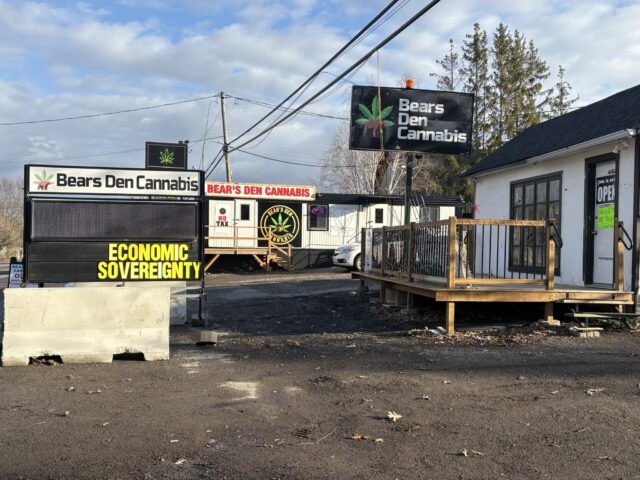
Réponse rapide : Avant d’acheter dans un oka dispensary, retenez quatre points : les boutiques sont regroupées à Kanesatake (la communauté mohawk voisine d’Oka) et opèrent sur le territoire souverain mohawk de Kanesatake plutôt que dans le réseau de la SQDC, donc leur statut légal diffère de la vente au détail provinciale; l’âge légal au Québec est de 21 ans et la limite de possession dans un lieu public est de 30 grammes; apportez une pièce d’identité valide et de l’argent comptant en réserve; et commencez bas avec les comestibles, car l’effet tarde à venir. Pour une première visite, la plupart des gens s’en tirent bien en commençant chez Bear’s Den Cannabis, à Kanesatake, une boutique établie, de propriété autochtone féminine, où le personnel prend le temps d’expliquer.

La plupart des guides sur l’achat de cannabis autour d’Oka se contentent de classer les boutiques et s’arrêtent là. C’est correct si vous savez déjà ce que vous faites. Mais bien des gens qui cherchent un oka dispensary ne veulent pas un palmarès. Ils veulent savoir dans quoi ils s’embarquent : est-ce même légal, quel âge faut-il avoir, quoi acheter au juste, et comment ne pas avoir l’air perdu au comptoir. Ce guide répond à ça.

J’ai passé assez de temps autour de ce coin du milieu du cannabis au Québec pour savoir où les nouveaux venus accrochent. Alors, au lieu d’un autre « top 10 », voici les six choses qui comptent vraiment avant de dépenser un sou dans un dispensaire de la région d’Oka. Lisez-les d’abord, et votre visite se déroulera pas mal mieux.

Pourquoi ce secteur attire-t-il autant de monde? En partie une simple question de géographie : une excursion facile depuis Montréal à travers une belle campagne. En partie l’effet de regroupement : plusieurs boutiques se trouvent à courte distance les unes des autres à Kanesatake, ce qui permet de comparer en une seule visite. Et en partie parce que ces boutiques autochtones offrent des gammes de produits et des structures de prix différentes de celles du détaillant provincial, ce qui est justement pourquoi les gens font la route plutôt que de visiter une SQDC plus proche de chez eux. Cette même différence rend le portrait légal important à bien comprendre, et c’est par là que commence ce guide.

D’abord la géographie : « Oka » veut souvent dire Kanesatake

Ça mêle presque tout le monde au départ. Le village d’Oka lui-même a très peu de commerces de cannabis. Les boutiques dont les gens parlent quand ils disent « oka dispensary » se trouvent juste à côté, à Kanesatake, la communauté mohawk sur la rive nord du lac des Deux Montagnes, à environ une heure au nord-ouest de Montréal. Les deux noms s’emploient comme s’il s’agissait du même endroit. Quand vous cherchez un dispensaire à Oka sur une carte, vous aboutissez presque toujours à une adresse de Kanesatake comme le Rang Ste-Philomène. Le savoir d’avance vous évite la confusion quand votre GPS affiche « Kanesatake » alors que votre recherche disait « Oka ».

1. Comprenez le portrait légal avant toute chose

C’est le point le plus important à saisir, et c’est celui que la plupart des guides d’Oka escamotent. Mettez ça au clair avant d’y aller.

Pourquoi ça compte

Au Québec, le seul détaillant de cannabis autorisé par le gouvernement est la Société québécoise du cannabis, la SQDC. En vertu de la Loi encadrant le cannabis, la province fixe les règles de la vente légale au détail. Les boutiques autour d’Oka ne passent pas par la SQDC. Elles se trouvent sur le territoire souverain mohawk de Kanesatake et opèrent selon des principes de souveraineté autochtone affirmée, en dehors du réseau provincial.

Ce qu’il faut savoir

Cette distinction est réelle et elle est contestée. Le statut légal de la vente de cannabis sur le territoire mohawk n’est pas reconnu par la province de la même manière que les points de vente de la SQDC. Un rapport d’un comité sénatorial de 2023 sur la participation autochtone au secteur légal du cannabis s’est penché précisément sur ces tensions et a constaté que beaucoup de communautés autochtones n’ont pas pleinement profité des retombées de la légalisation. Rien de tout cela ne vous donne un verdict juridique bien net comme client. Ça explique simplement pourquoi ces boutiques existent comme elles le font. Comprenez le cadre, et prenez une décision éclairée pour vous-même.

À qui ça s’adresse

À tout le monde. Il n’existe pas de version de l’achat ici où l’on peut sauter la compréhension de ce point.

2. Connaissez les règles d’âge et de possession

Les règles du Québec sur le cannabis comptent parmi les plus strictes au pays, et ce ne sont pas des connaissances facultatives.

Pourquoi ça compte

Le Québec a fixé son âge légal à 21 ans pour acheter ou posséder du cannabis, le plus élevé au Canada. La plupart des autres provinces s’en tiennent à 18 ou 19 ans. Si vous avez l’habitude des règles d’une autre province, ça prend les gens au dépourvu. La limite de possession dans un lieu public est de 30 grammes de cannabis séché ou son équivalent sous d’autres formes.

Ce qu’il faut savoir

Apportez une pièce d’identité valide avec photo émise par le gouvernement, et attendez-vous à la présenter. La culture à domicile n’est permise nulle part au Québec, contrairement à certaines provinces où quelques plants à la maison sont autorisés. Le gouvernement du Québec rappelle aussi qu’il est interdit de fumer ou de vapoter du cannabis dans la plupart des lieux publics. Conservez ce que vous achetez en lieu sûr, hors de portée des enfants et des animaux, et ne conduisez jamais sous l’influence du cannabis.

À qui ça s’adresse

Surtout aux visiteurs de l’Ontario ou d’autres provinces, puisque les règles d’âge et de culture diffèrent de ce à quoi vous êtes peut-être habitué.

3. Apprenez à juger la qualité des produits vous-même

Pas besoin d’être un spécialiste, mais quelques vérifications rapides séparent un bon achat d’un achat décevant. C’est l’aptitude qui rapporte dans n’importe quel oka dispensary, ou ailleurs.

Pourquoi ça compte

La qualité varie. Savoir reconnaître d’un coup d’œil une bonne fleur, ou poser la bonne question sur un concentré ou un comestible, vous permet de repartir avec quelque chose que vous apprécierez vraiment au lieu de deviner.

Ce qu’il faut savoir

Pour la fleur, cherchez une belle couleur, un arôme frais et prononcé, et des trichomes visibles, ces petits cristaux givrés sur les bourgeons. L’Institut national de santé publique du Québec rappelle que les effets et la qualité du cannabis varient selon le produit et sa conservation. Une fleur sèche, cassante ou presque sans odeur est un signal d’alarme. Pour les comestibles et les cartouches, l’essentiel est une information de dosage claire pour connaître la teneur. Pour les concentrés, demandez comment ils ont été fabriqués; les options sans solvant comme le rosin et le bubble hash plaisent aux gens qui veulent éviter les résidus de solvant. Un bon conseiller répondra à tout ça avec plaisir. S’il ne peut pas ou ne veut pas, ça vous apprend quelque chose aussi.

À qui ça s’adresse

À quiconque dépense un vrai montant et veut éviter un achat regrettable.

Type de produit Vérification rapide de la qualité
Fleur Belle couleur, arôme prononcé, trichomes visibles, ni sèche ni cassante
Comestibles Dosage clair par portion sur l’étiquette pour commencer bas
Concentrés Demandez la méthode d’extraction; sans solvant pour éviter les résidus
Vapoteuses Huile de qualité, sans additifs inutiles, marque réputée

4. Choisissez le type de produit selon ce que vous voulez vraiment

Entrer avec un objectif approximatif vaut mieux qu’entrer avec un nom de variété au hasard vu en ligne. Voici l’essentiel de ce que chaque format fait.

Pourquoi ça compte

Le format que vous choisissez façonne toute l’expérience : la vitesse d’apparition de l’effet, sa durée, sa discrétion. Choisir le mauvais est l’erreur de débutant la plus courante.

Ce qu’il faut savoir

La fleur est le classique : effet rapide quand on la fume, polyvalente, et la plus grande variété de souches. Les concentrés visent une puissance plus élevée et une saveur raffinée, mieux adaptés aux consommateurs expérimentés. Les comestibles sont discrets et durent longtemps, mais lents à agir, parfois jusqu’à quelques heures, ce qui est justement pourquoi les gens en prennent trop. Les vapoteuses sont pratiques et plus propres que la fumée, avec des cartouches par souche si vous cherchez un caractère précis. Les topiques s’appliquent sur la peau pour un usage localisé et ne provoquent pas d’effet planant. Comme repère de départ, les variétés indica sont souvent décrites comme plus relaxantes et axées sur le corps, les sativas comme plus stimulantes et de jour, et les hybrides comme un équilibre, mais les effets varient d’une personne à l’autre, alors traitez les étiquettes comme un point de départ et demandez au personnel de préciser.

À qui ça s’adresse

Aux débutants et à quiconque sort de son format habituel.

Un point de plus mérite d’être souligné ici, parce que c’est là que surviennent les plus mauvaises expériences évitables : les comestibles et leur effet retardé. Quand vous fumez ou vapotez, l’effet arrive en quelques minutes, alors vous pouvez ajuster la quantité à tâtons. Les comestibles ne fonctionnent pas comme ça. Ils passent d’abord par le système digestif, ce qui peut repousser l’apparition de l’effet à 30 minutes, une heure, voire deux, et l’effet tend à être plus fort et plus long une fois qu’il arrive. L’erreur classique est de reprendre une dose parce que la première « n’a rien fait », puis de recevoir les deux d’un coup. La solution est simple et c’est le même conseil que donne tout conseiller responsable : prenez une faible dose, attendez deux heures complètes avant même d’envisager d’en reprendre, et planifiez votre soirée en fonction de ce délai. Ce n’est pas un conseil palpitant, mais c’est la différence entre une expérience agréable et une expérience inconfortable dont vous vous souviendrez pour les mauvaises raisons.

5. Apportez les bonnes choses (et les bonnes attentes)

Un peu de préparation évite un déplacement inutile, d’autant que ces boutiques sont assez loin de la ville.

Pourquoi ça compte

Les politiques de paiement et d’identification ne sont pas uniformes, et les boutiques sont assez éloignées pour qu’un portefeuille oublié signifie une heure de retour pour rien.

Ce qu’il faut savoir

Apportez toujours une pièce d’identité valide avec photo. Apportez de l’argent comptant en réserve, car certaines boutiques n’acceptent que le comptant et d’autres les cartes, et les politiques changent. Si vous venez de loin, un appel rapide avant de partir confirme les heures et l’inventaire, car les petites boutiques ajustent les deux. Ayez aussi des attentes réalistes : ce sont des commerces de détail, pas des cliniques médicales, et le personnel ne peut faire aucune prétention médicale. Pour toute question de santé, un professionnel de la santé autorisé est la bonne référence.

À qui ça s’adresse

À quiconque fait la route depuis Montréal, Laval ou Ottawa et ne veut pas recommencer.

6. Commencez par une boutique qui traite bien les nouveaux venus

Si vous ne retenez qu’une recommandation pratique de ce guide, que ce soit celle-ci : pour une première visite, commencez dans un endroit patient plutôt qu’au comptoir le plus achalandé possible.

Pourquoi ça compte

Votre première expérience en dispensaire donne le ton. Une boutique qui vous bouscule ou vous pousse à la vente vous laisse avec le mauvais produit et un mauvais souvenir. Une boutique qui pose des questions et écoute vous met sur la bonne voie.

Ce qu’il faut savoir

Parmi les options de la région d’Oka, Bear’s Den Cannabis est celle vers laquelle j’oriente le plus souvent les nouveaux venus. Elle est ouverte à Kanesatake depuis 2018, ce qui en fait une des boutiques les plus établies du secteur, et elle est de propriété autochtone féminine, avec un vrai lien avec la Nation mohawk de Kanesatake. Les raisons concrètes qui en font un bon choix pour un premier achat : une des gammes de produits les plus étendues du coin, couvrant la fleur, les concentrés, un grand menu de comestibles, les vapoteuses, les préroulés, le CBD et les topiques, plus un personnel réputé pour prendre son temps. Vous pouvez consulter le menu complet en ligne avant d’y aller, et appeler au (866) 306-2882 pour toute question. Sa page pour le dispensaire de Kanesatake donne l’itinéraire et les heures. Ça ne veut pas dire que les autres boutiques du secteur sont mauvaises; plusieurs sont bien cotées. C’est simplement l’endroit le plus facile pour prendre vos repères.

À qui ça s’adresse

Aux débutants, aux acheteurs prudents, et à quiconque valorise l’accompagnement plutôt que de prendre et partir.

Planifier le trajet et la journée

Une bonne partie de l’attrait d’une virée cannabis dans la région d’Oka, c’est le trajet lui-même, alors planifiez-le comme une petite sortie. Le secteur Kanesatake-Oka se trouve à environ une heure au nord-ouest de Montréal. Depuis Montréal, prenez l’autoroute 15 ou 13 vers le nord, rejoignez l’autoroute 640 Ouest en direction d’Oka, puis la route 344 jusqu’à Kanesatake. Selon la circulation, comptez de 45 à 60 minutes. Depuis Ottawa ou Gatineau, prévoyez plutôt de une heure et demie à deux heures par l’autoroute 417 et l’autoroute 40.

Un mot sur le moment de la visite, car il change plus de choses qu’on pense. Les boutiques n’ont pas toutes les mêmes heures, et certaines du secteur ferment nettement plus tard que d’autres. Une visite en soirée après le travail est donc réaliste, mais appelez pour confirmer plutôt que de présumer. Les fins de semaine et les fins d’après-midi sont plus achalandées, ce qui convient si vous voulez entrer et sortir vite, mais moins si vous débutez et voulez toute l’attention d’un conseiller. Une visite en semaine, ou plus tôt dans la journée, signifie habituellement un comptoir plus calme et plus de temps pour poser des questions. Bien des gens jumellent la virée avec un arrêt au parc national d’Oka, aux plages du lac des Deux Montagnes ou chez les producteurs de fromage du coin, ce qui transforme une simple emplette en vraie sortie. Partir plus tôt laisse aussi de la lumière du jour pour le reste de l’excursion. Rien de compliqué, mais quelques minutes de planification transforment un bon trajet en trajet facile.

Liste de vérification pour une première visite

Tout ce qui précède, condensé en ce qu’il faut faire avant et pendant votre visite dans un oka dispensary.

Étape Quoi faire
Avant de partir Confirmez que vous avez 21 ans et plus, comprenez le contexte légal de souveraineté, et vérifiez les heures de la boutique
À apporter Une pièce d’identité valide avec photo et de l’argent comptant en réserve
Au comptoir Décrivez l’expérience voulue, pas un nom de souche; demandez le dosage et la qualité
Avec les comestibles Commencez bas, attendez, ne reprenez pas une dose trop tôt
Après Rangez en lieu sûr, hors de portée des enfants et des animaux, et ne conduisez jamais avec les facultés affaiblies

Foire aux questions

Est-il légal d’acheter dans un oka dispensary?

Les boutiques de la région d’Oka opèrent sur le territoire souverain mohawk de Kanesatake, en dehors du réseau provincial du Québec. Le seul détaillant autorisé par le gouvernement du Québec est la SQDC. Le statut légal de la vente de cannabis sur le territoire mohawk relève d’une souveraineté autochtone affirmée et il est contesté, c’est-à-dire qu’il n’est pas reconnu par la province de la même façon que la vente par la SQDC. Comprenez ce cadre et prenez une décision éclairée avant de magasiner.

Quel âge faut-il avoir pour acheter du cannabis au Québec?

Au Québec, l’âge légal pour acheter ou posséder du cannabis est de 21 ans, le plus élevé au Canada. La limite de possession dans un lieu public est de 30 grammes de cannabis séché ou son équivalent. Apportez une pièce d’identité valide avec photo; on vous la demandera fort probablement.

Quel est le meilleur oka dispensary pour un premier achat?

Pour une première visite, Bear’s Den Cannabis, à Kanesatake, est un excellent point de départ. La boutique est en activité depuis 2018, propose une des gammes de produits les plus étendues du secteur, et son personnel est reconnu pour un accompagnement patient et sans pression, exactement ce qu’un nouveau venu recherche. Plusieurs autres boutiques du secteur sont aussi bien cotées, alors vous pourrez comparer une fois vos repères pris.

À quelle distance Oka se trouve-t-il de Montréal, et comment s’y rendre?

Le secteur des dispensaires de Kanesatake-Oka est à environ une heure au nord-ouest de Montréal. Prenez l’autoroute 15 ou 13 vers le nord jusqu’à l’autoroute 640 Ouest, puis la route 344 jusqu’à Kanesatake. Prévoyez de 45 à 60 minutes par direction selon la circulation. Depuis Ottawa, comptez de une heure et demie à deux heures.

Les dispensaires d’Oka acceptent-ils les cartes ou l’argent comptant?

Ça varie d’une boutique à l’autre et ça peut changer. Certaines acceptent le débit et le crédit, d’autres n’acceptent que le comptant. Le plus prudent est d’apporter de l’argent comptant en réserve même si une boutique accepte habituellement les cartes, et d’appeler avant de faire la route pour confirmer.

Que devrais-je acheter lors de ma première visite?

Commencez par dire au conseiller quel genre d’expérience vous voulez, une soirée détendue, un effet plus léger de jour, quelque chose de discret et de longue durée, plutôt que de nommer une souche précise. Si vous débutez, la fleur ou un comestible à faible dose est une porte d’entrée facile, et avec les comestibles la règle d’or est de commencer bas et d’y aller lentement, puisque l’effet peut prendre quelques heures. Une bonne boutique vous guidera pour le reste.

En résumé

Acheter dans un oka dispensary est simple une fois les règles de base connues : il s’agit en fait de Kanesatake, les boutiques opèrent en dehors du réseau provincial du Québec selon une souveraineté autochtone affirmée, l’âge légal est de 21 ans, et un peu de préparation sur l’identité, le comptant et le type de produit rend le tout facile. Entrez avec un objectif plutôt qu’une liste d’épicerie, appuyez-vous sur le personnel, et allez-y doucement. Si vous voulez un seul endroit où commencer, Bear’s Den Cannabis est un premier arrêt facile et accueillant, et à partir de là vous en saurez assez pour explorer le reste du secteur en confiance.

Avis : Cet article est fourni à titre informatif seulement et ne constitue pas un avis juridique ni médical. Le cannabis est réservé aux adultes et affecte chaque personne différemment. Il ne convient pas à tout le monde, et aucun produit mentionné ici ne prétend traiter, guérir ou prévenir quelque affection que ce soit. La vente de cannabis sur le territoire mohawk relève d’une souveraineté autochtone affirmée et son statut légal est contesté; renseignez-vous sur les lois applicables avant d’acheter. Pour toute question de santé, consultez un professionnel de la santé autorisé. Consommez de façon responsable et ne conduisez jamais sous l’influence du cannabis.

How CBD Oil Is Commonly Used

Introduction

Over the last several years, CBD oil has become one of the most widely discussed products in the hemp wellness industry. What was once a relatively niche product known mostly among hemp enthusiasts has evolved into a mainstream wellness option that can now be found in specialty stores, wellness shops, and online marketplaces around the world.

Despite its growing popularity, many people are still unsure about how CBD oil is actually used in everyday life. New consumers often hear about CBD through friends, family members, wellness communities, or social media discussions, but they may not fully understand how people incorporate it into their routines or what makes it different from other wellness products.

CBD oil is remarkably versatile. Individuals use it in a variety of ways depending on their personal wellness goals, lifestyle habits, and product preferences. While experiences vary from person to person, understanding the most common uses of CBD oil can help consumers make more informed decisions as they explore the hemp wellness space.

In this guide, we’ll take an in-depth look at how CBD oil is commonly used, the different ways people incorporate it into their daily routines, and what consumers should know before purchasing or using CBD products.

What Is CBD Oil?

Before discussing its common uses, it is important to understand what CBD oil actually is.

CBD, short for cannabidiol, is a naturally occurring compound found in hemp plants. It belongs to a group of compounds known as cannabinoids, which interact with the body’s endocannabinoid system.

CBD oil is typically produced by extracting cannabidiol from hemp and combining it with a carrier oil such as hemp seed oil, MCT oil, or another plant-based oil. The resulting product is designed for convenient use and often comes in bottles with droppers that allow users to measure serving sizes.

Unlike THC, CBD does not produce intoxicating effects. This distinction is one of the primary reasons CBD products have become popular among consumers interested in hemp-derived wellness options.

The Growing Popularity of CBD Oil

One of the reasons CBD oil has gained such widespread attention is its flexibility.

Rather than being tied to a single purpose, CBD oil is often incorporated into broader wellness routines. Many consumers view it similarly to other lifestyle-focused products that support overall balance and self-care habits.

The popularity of CBD has also been fueled by increased public awareness, expanding product availability, ongoing scientific interest, and growing consumer curiosity about hemp-derived compounds.

As more people become familiar with CBD, its use continues to expand across a wide variety of wellness communities.

Using CBD Oil as Part of a Daily Wellness Routine

Perhaps the most common use of CBD oil is as part of a general wellness routine.

Many consumers take CBD oil at consistent times throughout the day, much like they might use nutritional supplements or other wellness products.

Some individuals prefer taking CBD in the morning as part of their daily routine before beginning work, exercising, or handling everyday responsibilities. Others incorporate it into evening rituals that may include reading, meditation, stretching, or other relaxation-focused activities.

Consistency is often emphasized by experienced users who prefer making CBD a regular part of their overall lifestyle rather than using it sporadically.

Because CBD oil is easy to measure and consume, it has become one of the most popular formats for individuals seeking a straightforward hemp wellness product.

CBD Oil and Relaxation

A Common Choice for Unwinding

Many CBD users report that they incorporate CBD oil into routines designed to promote relaxation and mindfulness.

Modern life can be busy and demanding. Between work responsibilities, family commitments, and constant digital connectivity, many people actively seek ways to create moments of calm throughout the day.

For some consumers, CBD oil serves as part of a broader relaxation practice. It may be used alongside activities such as meditation, yoga, journaling, deep breathing exercises, or quiet evening routines.

Pairing CBD with Wellness Practices

One interesting trend within the hemp wellness community is the combination of CBD oil with other wellness habits.

Rather than viewing CBD as a standalone solution, many enthusiasts see it as one component of a larger lifestyle that includes healthy sleep habits, regular physical activity, balanced nutrition, and stress-management practices.

This holistic approach has contributed significantly to CBD’s popularity among wellness-focused consumers.

CBD Oil and Fitness Enthusiasts

Interest Within Active Communities

Fitness enthusiasts have become one of the most visible groups within the CBD marketplace.

People who participate in regular exercise often seek wellness products that complement active lifestyles. As a result, many athletes, gym-goers, runners, cyclists, and outdoor enthusiasts have expressed interest in hemp-derived wellness products.

CBD oil is frequently discussed within fitness communities because it can be conveniently integrated into existing wellness routines.

Pre-Workout and Post-Workout Use

Some individuals incorporate CBD oil before physical activity as part of their preparation routine.

Others prefer using CBD after workouts, often alongside stretching, hydration, recovery practices, and rest periods.

While personal experiences vary, the connection between CBD and active lifestyles remains one of the most commonly discussed topics in the hemp wellness space.

CBD Oil and Evening Routines

One of the largest groups of CBD consumers consists of individuals who use CBD oil during evening hours.

Many people enjoy establishing nighttime routines that help them transition from the demands of the day into a more relaxed environment. These routines may involve reducing screen time, reading books, taking warm showers, or practicing mindfulness exercises.

CBD oil is frequently included as part of these evening rituals because of its convenience and ease of use.

For many enthusiasts, the ritual itself becomes just as important as the product. Taking a few moments to focus on relaxation and self-care can be a meaningful part of maintaining overall wellness.

Different Ways People Use CBD Oil

Sublingual Use

One of the most common methods involves placing CBD oil under the tongue for a brief period before swallowing.

This method remains popular because it is simple, convenient, and allows users to easily measure serving amounts.

Adding CBD Oil to Food and Drinks

Some individuals add CBD oil to beverages such as coffee, tea, smoothies, or juices.

Others mix it into foods such as yogurt, oatmeal, or salad dressings.

While this approach may appeal to consumers who dislike the taste of hemp extracts, it is largely a matter of personal preference.

Incorporating CBD Into Wellness Rituals

Many experienced users create routines around CBD use rather than focusing solely on the product itself.

Whether combined with meditation, exercise, journaling, or evening relaxation practices, CBD often becomes part of a broader wellness experience.

Choosing a Quality CBD Oil

Not all CBD products are created equal.

Consumers should pay close attention to product quality, ingredient transparency, and manufacturing standards.

Reputable companies typically provide third-party laboratory testing that verifies cannabinoid content and screens for contaminants. Reviewing Certificates of Analysis can help consumers better understand exactly what is contained within a product.

It is also helpful to review ingredient lists, extraction methods, hemp sourcing information, and company transparency practices before making a purchase.

Understanding Different Types of CBD Oil

Consumers may encounter several categories of CBD products.

Full-spectrum CBD contains multiple cannabinoids and naturally occurring hemp compounds.

Broad-spectrum CBD contains multiple hemp-derived compounds while generally excluding detectable THC.

CBD isolate contains purified cannabidiol without the broader cannabinoid profile found in full-spectrum products.

Each option appeals to different consumer preferences and wellness goals.

The Importance of Personal Experience

One of the most important things to remember about CBD oil is that individual experiences vary.

Factors such as body chemistry, lifestyle, product quality, serving size, and consistency can all influence how a person incorporates CBD into their routine.

This variability is one reason why education remains so important within the hemp wellness industry.

Consumers who understand products, ingredients, and quality standards are generally better equipped to make informed decisions.

Conclusion

CBD oil has become one of the most popular hemp-derived wellness products available today because of its versatility, accessibility, and ease of use. People incorporate it into daily wellness routines, relaxation practices, fitness lifestyles, evening rituals, and broader self-care habits.

As interest in hemp wellness continues to grow, consumers are increasingly seeking reliable information about how CBD products fit into modern lifestyles. Understanding the many ways CBD oil is commonly used can provide valuable context for anyone exploring this rapidly evolving industry.

Whether you’re completely new to CBD or simply looking to deepen your understanding, education remains one of the most powerful tools for making confident and informed wellness decisions.